Canada’s Prime Minister Mark Carney revealed a major set of initiatives aimed at strengthening education and research collaboration with India during his landmark visit to Mumbai and New Delhi, which concluded on March 15, 2026.
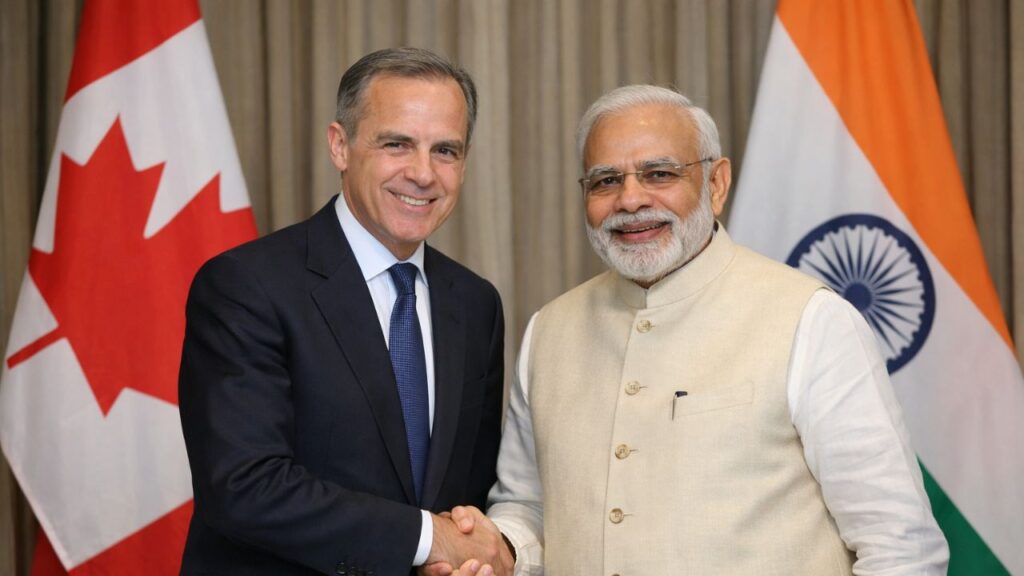
Key announcements include:
• 300 funded research positions for Indian students at Canadian universities
• Up to $100 million in fully funded scholarships from the University of Toronto
• 13 new academic partnerships between Canadian and Indian universities
• Canadian university campuses and research centres to be established in India
• $10 million in Indo-Pacific scholarships for joint research programs

This visit marked the first official bilateral trip to India by a Canadian prime minister since 2018.
The newly announced Canada–India Talent and Innovation Strategy represents one of the most significant expansions of academic cooperation between the two countries in recent decades.
For the 1.8 million Canadians of Indian origin and the hundreds of thousands of Indian students who have studied in Canada, these announcements highlight a strong commitment to deeper people-to-people connections.
Canada–India Talent and Innovation Strategy Announced
The centerpiece of the announcements is the Canada–India Talent and Innovation Strategy.
Prime Minister Mark Carney introduced the initiative during his meetings in Mumbai before holding discussions with Prime Minister Narendra Modi in New Delhi.
The strategy focuses on expanding education collaboration through several channels:
• Talent mobility programs between Canada and India
• Research exchanges across leading universities
• Joint academic programs between Canadian and Indian institutions
• Dual degree and joint degree pathways
• Offshore campuses of Canadian universities in India
The strategy recognizes the long-standing exchange of students, researchers, and professionals between the two nations.
Indian students have played a major role in strengthening Canada’s research ecosystem while benefiting from globally respected academic training.
Canadian universities have also gained from the talent, perspectives, and international networks Indian students bring to campuses.
Under this new framework, both governments plan to strengthen industry-focused training programs to prepare students for future economic demands.
A major highlight is the possibility of Canadian universities establishing offshore campuses in India.
This means Indian students may soon earn Canadian degrees without leaving their home country.
However, traditional study pathways to Canada will still remain available for students seeking the full international study experience.
The Joint Working Group on Higher Education between the two countries will also be revitalized to support the implementation of this strategy.
300 Funded Research Positions For Indian Students
One of the most impactful announcements involves expanding the MITACS Globalink Research Internship program.
A new agreement between India’s All India Council for Technical Education and Canada’s MITACS will make this expansion possible.
Through this initiative, approximately 300 Indian undergraduate students will receive funded research placements at Canadian universities every year.
The program offers Indian students:
• Hands-on research experience at leading Canadian universities
• Direct mentorship with Canadian faculty members
• Exposure to advanced research techniques and international collaboration
• Professional training alongside academic research
• Skills development in project management and cross-cultural communication
For Indian undergraduate students planning to pursue graduate studies in Canada, the Globalink internship can serve as a strong stepping stone.
Participants build relationships with Canadian researchers and strengthen their academic profiles.
The program also helps students develop the research experience needed for competitive graduate school applications.
The 300 funded positions demonstrate a significant commitment to building future research talent between Canada and India.
University Of Toronto Announces $100 Million Scholarship Program
In one of the largest scholarship announcements ever made for Indian students, the University of Toronto has committed up to $100 million to support approximately 200 fully funded scholarships.
This initiative highlights the university’s recognition of the academic excellence and potential of Indian students.
The scholarships will fully cover:
• Tuition fees
• Living expenses
• Other educational costs related to studying in Canada
For many talented Indian students facing financial barriers, this program opens doors to one of the world’s top-ranked universities.
The University of Toronto offers programs across nearly every academic discipline and provides access to world-class faculty and research facilities.
Students receiving these scholarships will also benefit from the university’s diverse academic community.
Beyond the scholarship recipients themselves, the announcement sends a strong signal that Canadian universities are actively investing in Indian talent.
The program will also create opportunities for Canadian students to study and conduct research in India, reinforcing the two-way nature of the partnership.
13 New University Partnerships Between Canada And India
The strategy also includes the launch of 13 new partnerships between Canadian and Indian universities.
These collaborations will support:
• Student exchange programs
• Faculty mobility initiatives
• Joint research projects
• Collaborative academic programs
• Degree completion pathways
Some of the notable partnerships include:
• University of British Columbia with O.P. Jindal Global University
• Simon Fraser University with O.P. Jindal Global University
• Simon Fraser University with Hydrogen Association of India
• University of the Fraser Valley with Panjab University
• Algoma University with Parul University
• Algoma University with Chandigarh University
• Dalhousie University with SRM Institute of Science and Technology
• Dalhousie University with Indian Council of Agricultural Research
• University of Guelph with O.P. Jindal Global University
• Brock University with O.P. Jindal Global University
• Royal Roads University with O.P. Jindal Global University
• University of Toronto with Indian Institute of Science
• University of Toronto with Jio Institute
These agreements create strong academic bridges between institutions in both countries.
Dalhousie University Innovation Campus In India
Dalhousie University plans to establish a new innovation campus in India.
The campus will be developed in collaboration with:
• Indian Institute of Technology Tirupati
• Indian Institute of Science Education and Research Tirupati

This will be one of the first Canadian university campuses operating in India.
The innovation campus will allow students to learn from faculty and research resources from institutions across both countries.
Indian students will gain access to Canadian academic methods and research practices without needing to relocate abroad.
This model can also support students who face visa limitations, financial barriers, or family commitments.
Centres Of Excellence By Toronto And McGill
The University of Toronto and McGill University will also establish Centres of Excellence in India.
These centres will support:
• Academic research collaboration
• Student programs and workshops
• Development of new university partnerships
The University of Toronto centre will focus on areas such as:
• Artificial intelligence
• Health sciences
• Sustainable development
McGill University’s centre will bring strengths in medicine, engineering, law, and scientific research.
These centres are designed as long-term institutional commitments that will strengthen academic ties between Canada and India.
Students will also gain easier access to information about studying in Canada and connecting with Canadian researchers.
$10 Million Indo-Pacific Research Scholarships
Canada has also allocated $10 million under its Indo-Pacific Strategy to support research collaboration.
The program will fund more than 85 Canadian graduate students and researchers to travel to India and collaborate with leading Indian institutions.
Key research areas include:
• Clean hydrogen technologies
• Climate resilience research
• Artificial intelligence development
• Trade and supply chain resilience
• Sustainable development initiatives
Although the scholarships mainly support Canadian students traveling to India, they also strengthen long-term research partnerships that benefit Indian scholars.
Canada–India Major Strategic Partnerships
Beyond education, the visit also produced major strategic partnerships in areas including:
• Energy cooperation
• Technology and artificial intelligence
• Defence and maritime security
• Trade and economic investment
One major development is the proposed Canada–India Comprehensive Economic Partnership Agreement expected to be finalized by the end of 2026.
The agreement aims to increase bilateral trade to $70 billion by 2030.
Another major deal includes a $2.6 billion uranium supply agreement between India and Canadian company Cameco.
The agreement will supply uranium from 2027 to 2035 to support India’s nuclear energy program.
Immigration Opportunities For Indian Students
While these announcements do not directly change immigration policy, they could indirectly improve opportunities for Indian students and skilled workers.
Key areas that may benefit include:
• Study permit pathways
• Post-graduation work permits
• Express Entry permanent residence programs
• Provincial nominee programs
Increased corporate investment from Indian companies operating in Canada may also create additional employment opportunities for Indian professionals.
Students completing Canadian degrees typically gain strong advantages when applying for permanent residency.
Canada–India Outlook For 2026
Prime Minister Carney’s visit marks a major step forward in Canada–India relations.
Both governments emphasized the importance of expanding cooperation in education, technology, trade, and innovation.
High-level engagement between the two countries is expected to continue throughout 2026 through:
• Ministerial meetings
• Business delegations
• Implementation of partnership agreements
For Indian students and professionals considering Canada, these developments indicate a positive environment for future education and immigration opportunities.
Canada–India Partnership Summary
| Initiative | Details |
|---|---|
| Research Positions | 300 funded research internships for Indian students annually |
| Scholarships | $100 million scholarships from University of Toronto |
| University Partnerships | 13 new collaborations between Canadian and Indian universities |
| Research Scholarships | $10 million Indo-Pacific research program |
| Innovation Campus | Dalhousie University campus in partnership with IIT Tirupati |
| Centres Of Excellence | New research centres by University of Toronto and McGill |
Frequently Asked Questions
What scholarship opportunities are available for Indian students?
The University of Toronto has announced up to $100 million in scholarships supporting around 200 fully funded positions. Additionally, the MITACS Globalink program will offer 300 funded research internships annually.
Which universities announced new partnerships?
Several Canadian universities including UBC, Simon Fraser University, Algoma University, Dalhousie University, Brock University, Royal Roads University, University of Guelph, and the University of Toronto announced new partnerships with Indian institutions.
Will Canadian universities open campuses in India?
Yes. Dalhousie University will open an innovation campus in India while the University of Toronto and McGill will establish Centres of Excellence to strengthen academic collaboration.
Will the Canada–India trade agreement impact immigration?
The upcoming Comprehensive Economic Partnership Agreement may include labour mobility provisions that could create improved pathways for professionals, business visitors, and skilled workers.
Which sectors offer the most opportunities?
Key sectors prioritized under the partnership include artificial intelligence, energy, healthcare, agriculture, critical minerals, and clean technology.